
Many design engineers ask an important question when specifying protective sleeving for intricate wiring harnesses: Is polyolefin heat shrink tubing flexible enough to bend easily without cracking in demanding industrial environments?
The short answer is an absolute yes. Premium polyolefin heat shrink tubing stands out as one of the most pliable and dependable options available for wire protection and harness management. You can bend, twist, and route it around tight corners with minimal effort while maintaining an impressive bending radius throughout installation and service life.
Before selecting protective sleeving for your project, understanding how specific material chemistry, wall thickness, and recovery ratios affect long-term pliability is essential to avoiding premature harness failure.
What Makes Polyolefin Tubing Inherently Flexible?
Manufacturers synthesize polyolefin tubing from a specialized class of synthetic polymers engineered for high mechanical toughness and operational resilience. During manufacturing, the material undergoes an electron-beam cross-linking process. Cross-linking creates strong chemical bonds between individual polymer chains, giving the extruded tubing a permanent chemical memory and exceptional elastic recovery.
- Un-cross-linked Polymers: Rigid and heat-sensitive before treatment.
- Cross-Linked Matrix: Highly flexible, elastic, and resistant to mechanical stress after processing.
This matrix structure makes sure that flexible polyolefin retains its natural ability to bend without losing structural integrity, even after heat recovery.
Polyolefin vs. PVC Heat Shrink
Comparing polyolefin to standard PVC heat shrink sleeves highlights a drastic difference in physical dynamics:
- PVC Heat Shrink: Tends to grow stiff and rigid over time. In cold-weather settings or sub-zero operating conditions, PVC sleeves become brittle and crack under modest flexural stress or continuous vibration.
- Polyolefin Heat Shrink: Maintains a pliable nature across broad operating temperatures (typically from -67°F up to 275°F). Adhesive-lined polyolefin resists cracking during repeated flex cycles while keeping splices completely moisture-proof in dynamic environments like marine vessels, robotic arms, automotive engine bays, and aerospace assemblies.
Differentiating Polyolefin from Fluoropolymer Tubing
When selecting materials, engineers must match specific environmental stresses to the correct polymer family. While polyolefin provides cost-effective, highly pliable protection for general-purpose applications, severe chemical or extreme thermal environments require a different class of materials entirely.
Selecting the Right Industrial Protective Tubing
- Polyolefin Tubing: High flex and pliability, broad operating temperature range (-67°F to 275°F), ideal for general insulation, flame retardancy, and lightweight strain relief.
- Fluoropolymer Tubing: Extreme thermal rating (operating temperatures up to 500°F), near-100% chemical inertness, built for harsh solvent exposure and continuous high heat.
For applications subject to continuous temperatures exceeding 300°F or aggressive solvent exposure, engineers frequently look to high-performance fluoropolymer tubing solutions such as PTFE, FEP, or PFA. Polyolefin is an economical synthetic thermoplastic rather than a fluoropolymer. Fluoropolymers deliver near-total chemical inertness and extreme heat tolerance (up to 500°F), whereas polyolefin excels where supreme bendability, flame retardancy, and lightweight strain relief are the primary design priorities.
At Tef Cap Industries, our engineering team brings over 35 years of specialized manufacturing experience across both polymer categories. This expertise makes sure you receive objective guidance and precision-extruded materials designed specifically to your thermal, chemical, and mechanical specifications.
Key Material Properties at a Glance
| Feature / Property | Single Wall Polyolefin | Dual Wall (Adhesive-Lined Polyolefin) | PVC Shrink Sleeving | Fluoropolymer (PTFE/FEP) |
| Flexibility / Pliability | Very High | Moderate to High | Low to Moderate | Moderate to Rigid |
| Temperature Range | -67°F to 275°F | -67°F to 230°F | -20°F to 221°F | -328°F to 500°F |
| Moisture / Fluid Barrier | Good | Superior (Waterproof Encapsulation) | Fair | Superior (Chemically Inert) |
| Cold-Bend Performance | Outstanding (No cracking) | High | Poor (Brittle at sub-zero) | Exceptional |
| Primary Use Case | Wire harnesses, strain relief | Wet splices, outdoor exposure, marine sealing | Low-cost bundling | Extreme heat & harsh solvents |
How Wall Thickness and Shrink Ratios Impact Pliability
The physical geometry of your chosen sleeve dictates its final stiffness after recovery. Matching nominal size, wall thickness, and shrink ratio allows you to maintain optimal flexibility without compromising abrasion resistance.
1. Wall Thickness Variations
- Light / Thin Wall Tubing: Bends almost as effortlessly as the raw wire bundle itself. It provides swift shrinking action and maximum space savings in crowded electronic enclosures.
- Standard Wall Tubing: Delivers an ideal balance of dielectric strength, mechanical protection, and route-ability for general industrial wiring.
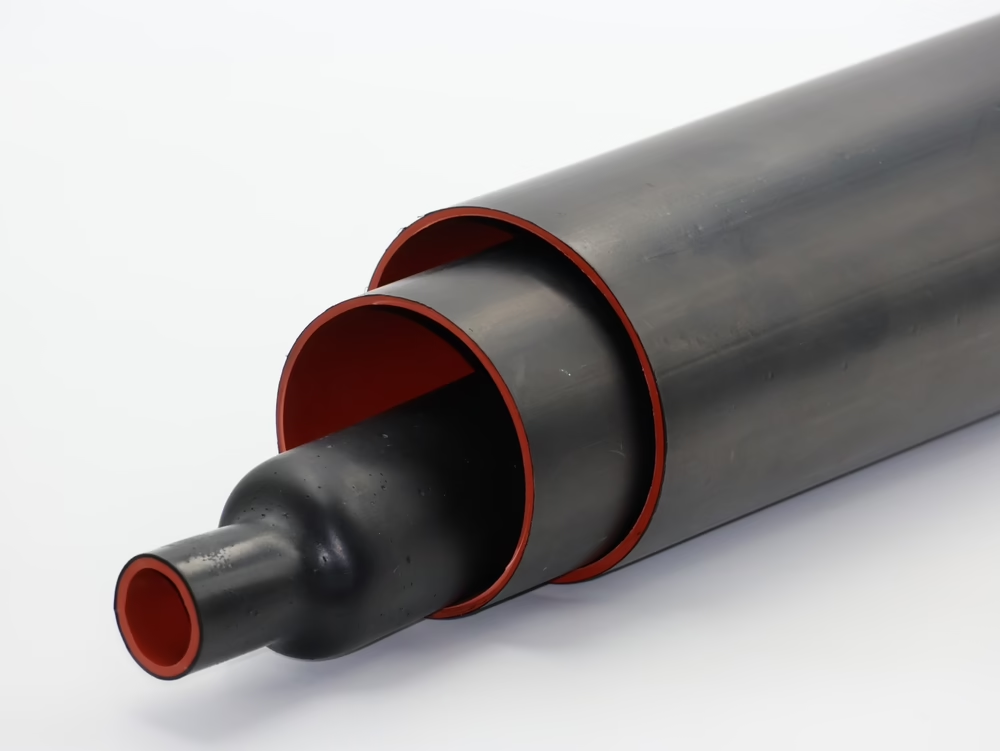
- Heavy Wall & Dual-Wall (Adhesive-Lined) Tubing: Features an inner meltable glue layer that flows during heating to permanently seal splices against moisture and fluids. Once cooled, the adhesive layer provides rigid strain relief and complete environmental insulation.
2. Shrink Ratios
Polyolefin tubing comes in common expansion ratios:
- 2:1 Shrink Ratio: Standard recovery ratio; minimizes wall buildup and keeps assemblies light and pliable.
- 3:1 and 4:1 Shrink Ratios: Essential for fitting over large connectors, multi-pin plugs, or awkward breakouts. Higher shrink ratios are particularly common in adhesive-lined tubing because they force more meltable adhesive around irregular splice shapes, guaranteeing a complete watertight seal.
Note: As polyolefin shrinks to a smaller diameter, its wall thickness increases proportionally. Selecting a tube size close to your component’s recovered dimensions prevents unnecessary wall buildup and stiffness.
Installation Guide for Maximum Flexibility and Watertight Seals
Following correct installation practices prevents localized overheating and makes sure the inner adhesive flows evenly across the entire splice.
- Clean Cut: Measure your required length and make a clean perpendicular cut using sharp shears. Avoid jagged edges or nicks, as small cuts can turn into tear propagation points when the sleeve contracts under heat.
- Position Sleeve: Slide the dual-wall or single-wall sleeve over the electrical connection or splice before applying heat. Make sure there is sufficient overlap (at least 1/4 to 1/2 inch beyond bare wire contacts) so the adhesive can form a complete perimeter ring.
- Apply Uniform Heat: Utilize a regulated industrial heat gun. Move the heat source continuously from the center outward to displace trapped air, achieving smooth recovery without burning.
- Inspect the Adhesive Seal (For Dual Wall): When installing adhesive-lined tubing, apply heat until you see a slight bead of clear/amber adhesive squeeze out smoothly from both ends of the sleeve. This visual cue verifies that the splice is 100% moisture-sealed.
Avoid applying direct open flames or holding a high-temperature nozzle in one spot. Excessive localized heat breaks down polymer chains, producing a brittle sleeve that loses flexibility and ruptures under bending stress.
Versatile Applications Across Industrial Sectors
Flexible polyolefin tubing, especially dual-wall adhesive-lined variants, serves vital roles across diverse commercial and manufacturing fields:
- Marine & Outdoor Wiring: Marine vessel electronics, bilge pumps, trailer wiring, and outdoor lighting splices rely on adhesive-lined polyolefin to block salt water immersion, moisture intrusion, and corrosion.
- Automotive & Off-Road Wiring Harnesses: Dynamic engine bays and undercarriage splices require sleeves that endure continuous vibration, road spray, fluid exposure, and tight radius bends. Vibrant standard colors streamline color-coding and wire identification.
- Medical Device Manufacturing: Medical-grade USP Class VI polyolefin provides biocompatibility and flexibility for delicate surgical handles, scopes, and catheter jacketing subject to repeated handling.
- Industrial Automation & Robotics: Multi-axis robotic arms require continuous torsional flexibility. Polyolefin protects internal conductor lines without restricting motion or degrading under cyclic strain.
- Aerospace & Military Applications: QPL-listed, flame-retardant polyolefin tubing (compliant with SAE-AMS-DTL-23053/4 and /5 specs) protects sensitive avionics while minimizing overall system weight.
Complementary Wire Management Solutions
For complex harness assemblies, combining polyolefin heat shrink tubing with secondary wire management tools builds complete end-to-end protection:
- Nylon Cable Ties: Secure bundled cables to structural frames, taking strain off electrical junctions.
- Expandable Braided Sleeving: Fits over long harness runs, offering high flexibility and ventilation.
- Rugged Convoluted Tubing: Delivers crush resistance for severe mechanical impact zones, with adhesive-lined polyolefin heat shrink applied at junction transitions to seal breakout entry points against water and debris.
Tef Cap Industries: Expertise, Customization, and Quality Assurance
Selecting the ideal protective tubing involves more than picking a part number, it requires working with a partner who understands resin dynamics, tolerances, and industry compliance.
At Tef Cap Industries, we bring complete manufacturing and value-added capabilities to support your engineering requirements:
- Extensive Stocking & QPL Compliance: We distribute QPL-listed military specification polyolefin tubing (AMS-DTL-23053/5 for single wall and AMS-DTL-23053/4 for adhesive-lined dual wall) in multiple wall styles, shrink ratios, and colors.
- Value-Added Secondary Services: Save labor time and eliminate waste with our custom cutting, cuffing, and custom packaging solutions.
- Uncompromising Standards: Our products comply with UL 224 (VW-1 flame rating), REACH, and RoHS directives, securing safety and global regulatory compliance.
Whether your project calls for ultra-pliable single-wall polyolefin, watertight adhesive-lined polyolefin, or high-temperature fluoropolymer solutions, our technical specialists help you choose the precise combination for long-term reliability.
Protect Your Assemblies with Confidence
Ready to optimize your wiring harness design with high-flexibility heat shrink solutions?
Contact Tef Cap Industries today to speak with a technical expert, request custom samples, or get a quote on high-performance polyolefin and fluoropolymer sleeving. Let our decades of extrusion expertise keep your critical electrical connections protected and flexible.